
The Process
Step 1.
Surface Preparation
The substrate must be structurally sound, clean, and properly primed. Plaster is a translucent mineral finish, meaning surface irregularities will telegraph through the final result.
-
All surfaces are inspected and corrected as needed.
-
Imperfections are filled and sanded flush.
-
A compatible bonding primer is applied to ensure proper adhesion and uniform absorption.
-
Adequate curing time is observed before application begins.
Proper preparation is critical to achieving depth, clarity, and long-term durability.
Step 2.
Base Coat Application
The first coat establishes tone and foundation.
Material is thoroughly mixed for color consistency and applied in controlled, thin passes using a stainless steel trowel. The plaster is laid in random, overlapping movements to begin developing subtle variation.
Coverage is intentionally partial to allow the finish to build dimension in subsequent layers. Edges are refined and surface tension is managed to prevent unwanted ridges or buildup.
The coat is allowed to dry fully before the next phase.
Step 3.
Surface Refinement
Once cured, the surface is lightly refined to remove minor tool lines and prepare for the next layer. This ensures clarity and cohesion in the finished appearance.
Step 4.
Second Coat – Texture & Depth
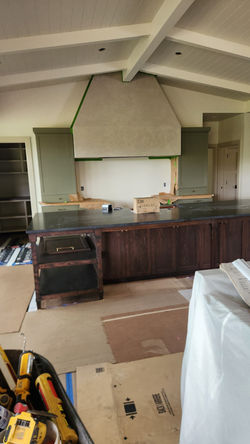
The second application develops the visual character of the finish.
Material is applied with tighter, layered movements to create controlled variation and full coverage. Trowel angle and pressure are adjusted to shape movement, density, and emerging sheen.
This stage determines the final visual complexity of the plaster.
The surface is allowed to cure completely before compression.
 |  |  |  |
|---|---|---|---|
 |  |  |  |
 |
Step 5.
Compression (Burnishing)
As the plaster reaches the optimal curing point, the surface is compressed using a clean blade under controlled pressure.
This compaction process creates the signature depth and natural sheen associated with traditional mineral finishes.
Timing and pressure at this stage are essential to achieving a refined finish without surface distortion.
Step 6.
Optional Third Layer
For projects requiring additional depth or elevated polish, a final skim layer may be applied and compressed to further enhance luminosity and dimensionality.
Step 7.
Final Refinement & Protection
If specified, the surface may be lightly polished for increased smoothness.
In high-use areas, a protective wax or breathable sealer can be applied to enhance durability while preserving the natural character of the mineral finish. This also allows for future maintenance and rejuvenation without compromising integrity.
Step 8.
Result
The final surface is not paint — it is a layered mineral finish with natural movement, subtle tonal shifts, and long-term durability.
Each installation is hand-applied and unique, reflecting both material character and craftsmanship.